

Surfers have been training on balance boards for decades. The question is not whether a balance board helps your surfing — the research and the rider feedback on that point are consistent. The question is which balance board is actually built to train the movements surfing demands, and which ones are generic fitness tools dressed up in surf marketing.
This guide covers what separates a genuine surf training balance board from everything else, and which Indo Board model fits where you are in your surfing right now.
What makes a balance board good for surf training
Not all balance boards train the same things. A flat platform on a half-sphere trains static balance. A wobble board trains ankle stability in isolation. Neither of these replicates what your body does on a surfboard.
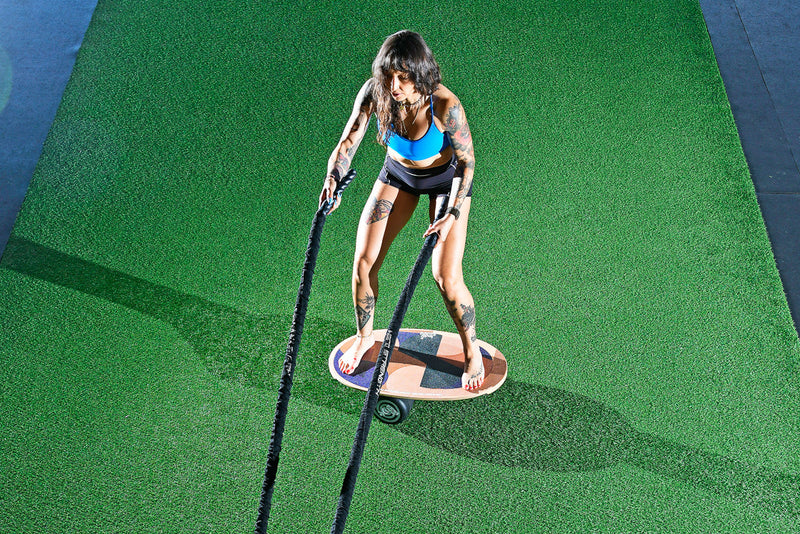
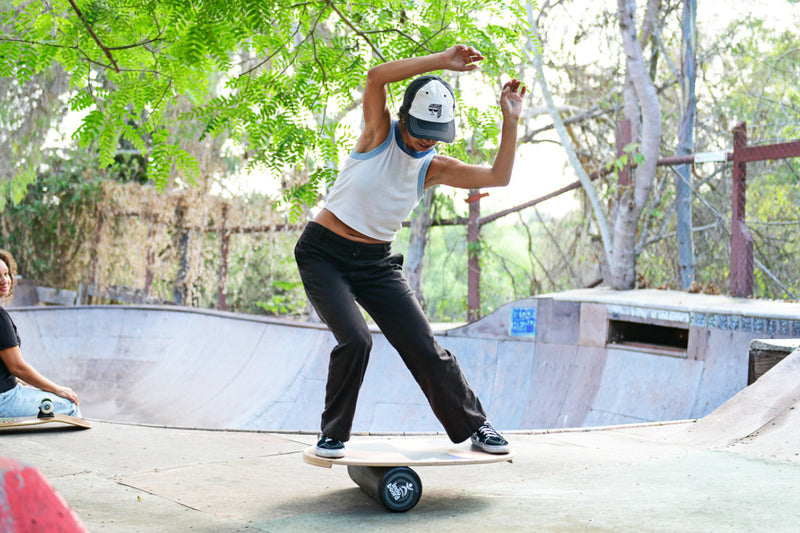
The best balance board for surfing trains dynamic, multi-directional balance on an unstable cylindrical surface — because that is what riding a wave actually feels like. Your weight is constantly shifting forward, back, rail to rail, adjusting to the face of the wave, the speed of the board, and the shape of the section ahead. A roller-based balance board is the closest dryland approximation of that movement pattern.
Beyond the basic mechanism, the best surf training balance boards share three specific characteristics.
Deck shape matters. A flat deck trains one set of movement patterns. A deck with rocker — the same reverse-camber curve found in surfboards — trains edge-to-edge transitions that map directly to carving, trimming, and redirecting on a wave. The shape of the board underfoot changes what your body learns.
Roller diameter matters. A larger diameter roller moves the board faster and creates a more dynamic, challenging ride. A smaller diameter roller is slower and more forgiving underfoot. For most beginners, the Foam Roller is the right starting point precisely because its smaller diameter gives you more time to respond and find your balance.
Range of motion matters. Some balance boards have built-in stops that limit how far the board can tilt. This makes the board more approachable for beginners. Removing the stops opens up the full range of motion and significantly raises the difficulty ceiling — closer to the uncontrolled instability of an actual wave.
The two Indo Board models for surf training
Indo Board has been building surf training balance boards since 1998. Every product in the lineup was developed from a surfing foundation — not adapted from a fitness product and remarketed to surfers. There are two primary models for surf training.
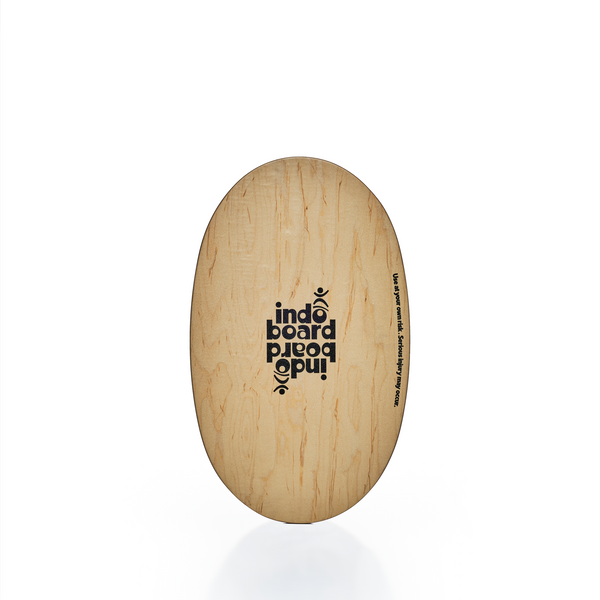
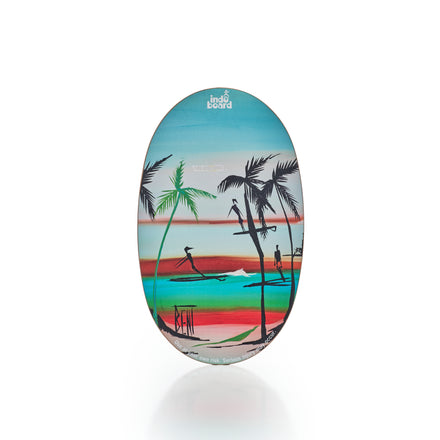
The Indo Board Original
The Original is the best balance board for surfing for most riders — beginners through experienced surfers who want year-round training without complexity.
The 30-inch by 18-inch flat deck with wood stops at either end gives you the right amount of challenge without the board running away from you. The stops create a controlled range of motion that lets you focus on balance and weight distribution rather than just staying on. The wider deck accommodates a natural surf stance and leaves room to shift your feet as the session progresses.
Pair it with the Foam Roller for a softer, more forgiving feel that closely approximates the fluid movement of an open-face wave. Pair it with the Original Roller for a faster, more dynamic response that trains quick-reaction stabilization.
The Original is where the vast majority of surfers start. It is also where many stay — not because they cannot progress, but because the training it delivers is genuinely effective at every level.
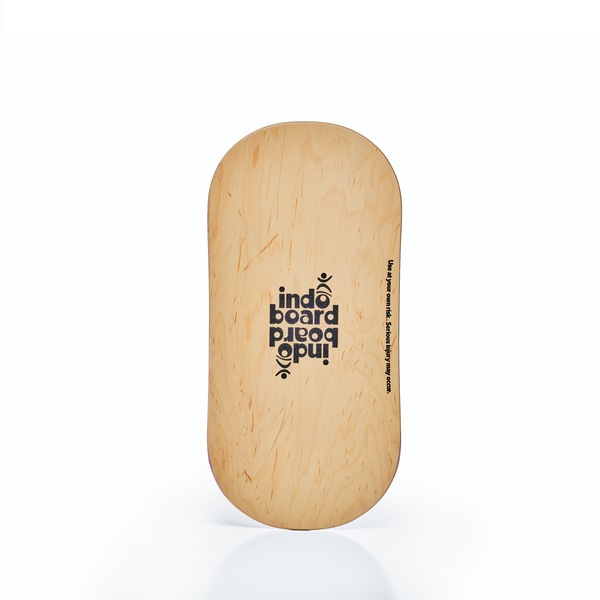
The Indo Board Rocker
The Rocker is the best balance board for surfing for experienced riders who want the most surf-specific training tool available.
The 33-inch by 16-inch deck has a built-in reverse-camber shape — the same rocker geometry found in high-performance surfboards. There are no stops, which means full range of motion from end to end. The narrower deck requires more precise foot placement and trains the lateral edge control that separates functional surfing from exceptional surfing.
The Rocker directly mimics the carving, redirecting, and rail-to-rail transitions that make up advanced surf movement. Riders who train on the Rocker consistently report that the movements transfer. The pop-up feels more natural. The bottom turns happen earlier. The edge engagement on a cutback is more instinctive.
If you have already mastered the Original and want to take the surf training further, the Rocker is the next step.
How to choose between them
Start with the Original if you are new to balance boards, returning from injury, or want a training tool that works year-round without a steep learning curve. The Original delivers genuine surf training results at every level of experience.
Choose the Rocker if you ride at an intermediate to advanced level, you have experience on a roller-based balance board, and you want a training tool whose geometry directly replicates the feel of a performance surfboard underfoot.
Both boards use the same roller system, which means you can start with the Original, build your foundation, and add the Rocker later without starting over. Many serious surfers own both and use them for different training purposes — the Original for daily conditioning, the Rocker for performance-specific work before a trip or heading into a competitive season.
What the best balance board for surfing actually does
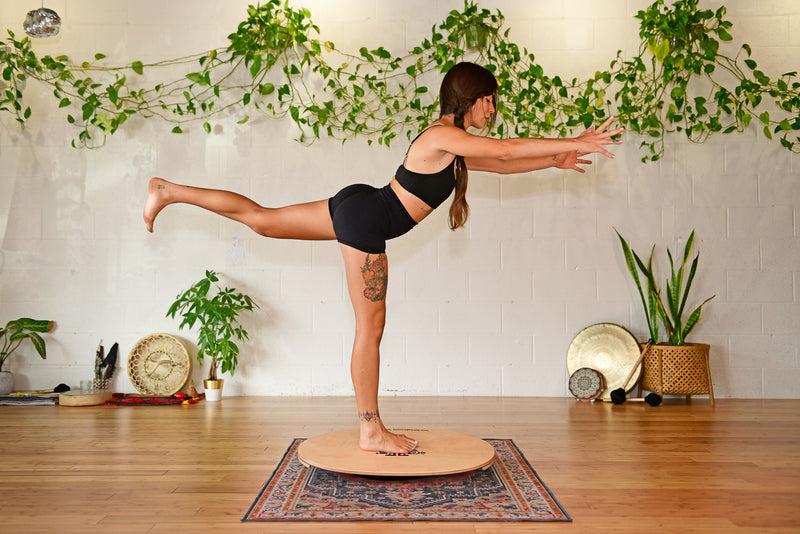
The best balance board for surfing does not replace time in the water. Nothing does. What it does is make the time you have in the water more productive by training the stabilizers, the weight distribution instincts, and the edge control habits that surfing rewards.
Riders who train consistently on an Indo Board report shorter re-entry periods after time off, faster progression through technique plateaus, and a general ease in the water that comes from having those movement patterns already dialed before they paddle out.
That outcome is the point. Not a piece of fitness equipment that happens to have a surf graphic on it — a training tool built by surfers, for surfers, that has been producing results since 1998.
If you are ready to find your board, start with the Original. If you are ready to take it further, the Rocker is waiting.




Comments (0)
There are no comments for this article. Be the first one to leave a message!