
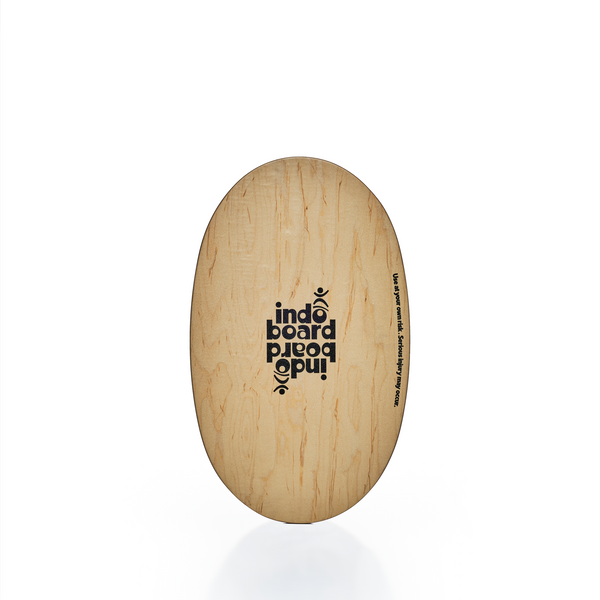
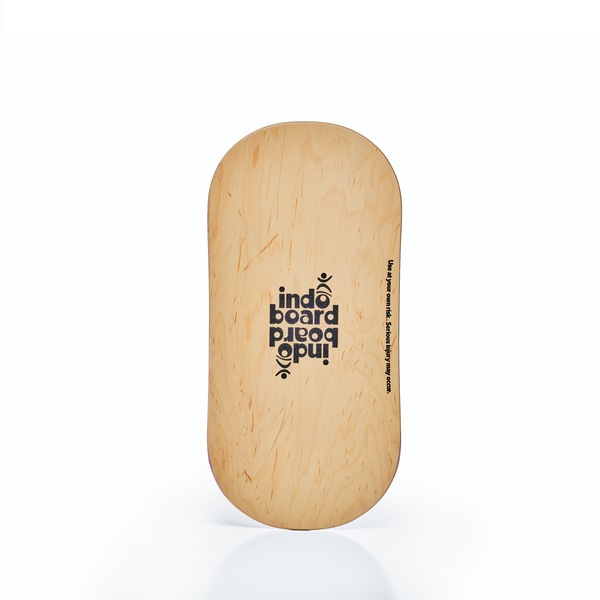
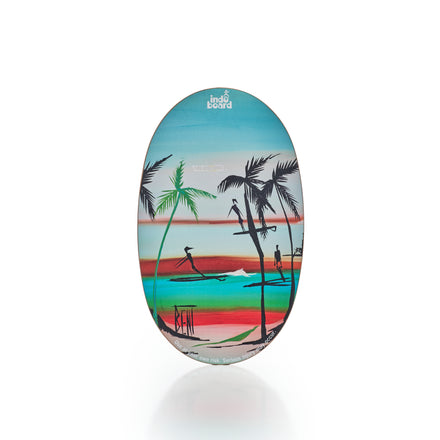
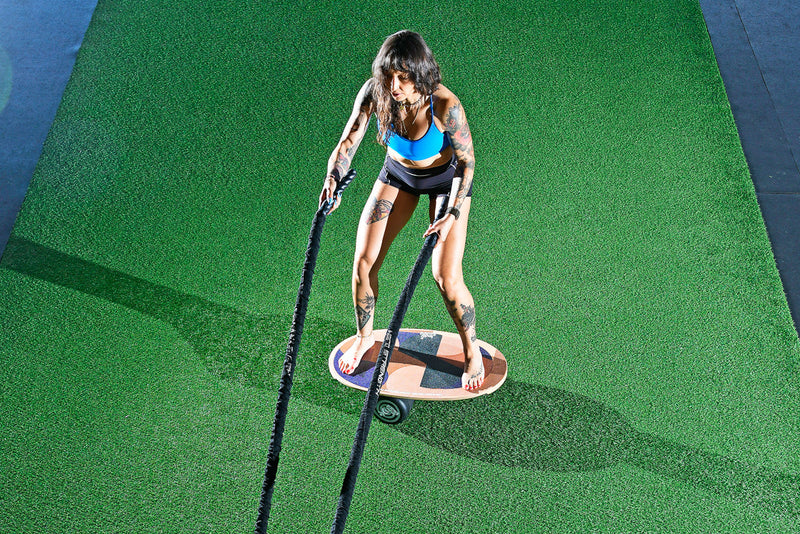
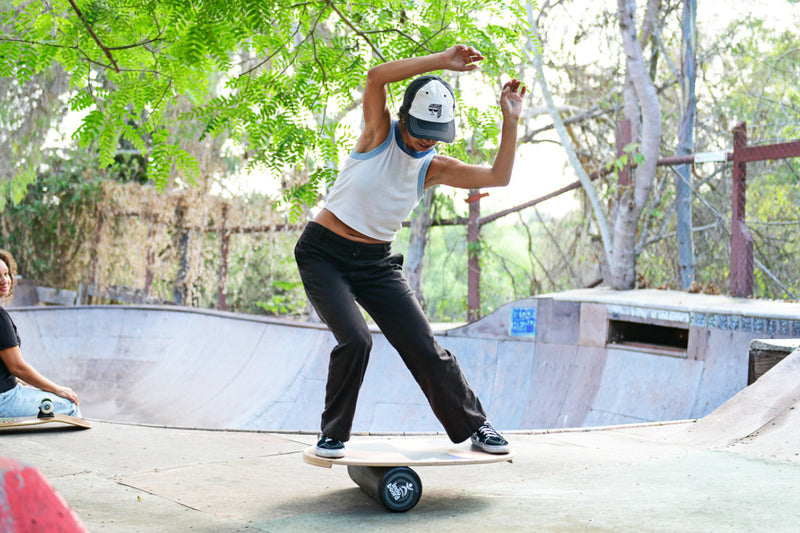

The balance board or roller board workout is deceptively simple in concept and genuinely demanding in practice. You place a board on a cylindrical roller, step on, and stay there. What happens in between is a full-body engagement of your stabilizers, core, and proprioceptive system that very few other training tools can replicate.
This guide is organized into two levels. Start with the beginner workout regardless of your general fitness level — the balance challenge is independent of strength, and building the right foundation from the start produces better long-term results than rushing into harder exercises.
One note before you start: your first session belongs near a wall or countertop. The roller on the Indo Board Original moves fast and responds to small weight shifts. That is exactly what makes it effective. It is also why you want something within reach for the first few minutes.
The Beginner Balance Board Workout (15 to 20 minutes)
The Hang Ten Hold
Stand centered on the board in an athletic stance — feet hip-width apart, knees soft, weight balanced so the roller is not touching either end of the board. Hold this position. Focus on the micro-adjustments your ankles and feet are making to keep the board level. This is not passive standing. Every second is active stabilization.
Sets: 4 holds of 30 seconds, with 30 seconds of rest between holds
Progress by: extending holds to 60 seconds before moving to the next exercise
The Shore Break Rock
From your balanced stance, deliberately shift your weight forward until the nose of the board approaches the ground, then shift back until the tail approaches, then recover to center. Make it controlled and intentional. You are training the forward and back weight distribution that governs everything from pop-up timing to trim speed on a surfboard.
Sets: 3 sets of 10 controlled rocks, full nose-to-tail range
Focus: deliberate weight shift, not momentum
The Side Rail
Shift your weight to your left foot until you feel the board respond — not until it tips over, just until you feel clear pressure — then shift to your right and feel the same response. Find the rhythm of the lateral shift and work within it. This trains the hip stability and lateral balance that transfers directly to skateboarding, snowboarding, and surfing.
Sets: 3 sets of 12 shifts per side
Focus: hip engagement leading the shift, not the ankle
The Knee Bend Hold
From your balanced stance, lower into a partial squat — about 45 degrees of knee bend — and hold that position while the board continues to move beneath you. This adds significant core and quad demand to the basic balance challenge. Keep your chest up and your knees tracking over your toes throughout.
Sets: 3 holds of 20 seconds in the squat position
Progress by: increasing the hold duration to 30 seconds before advancing to the intermediate level
The Intermediate Balance Board Workout (20 to 25 minutes)
Complete the beginner workout as a warmup before moving into intermediate exercises. Your first rep on the board in any session should be a standard balance hold to reestablish your center point.
The One-Wave Stand
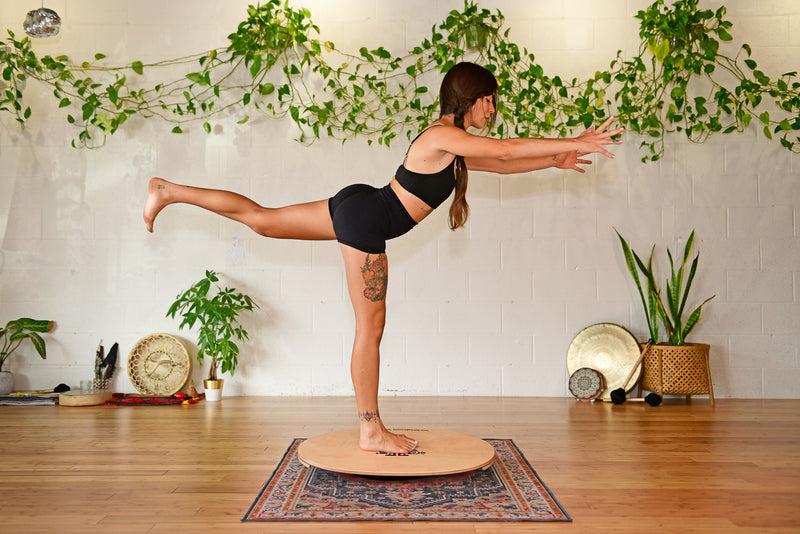
Lift one foot slightly off the board and hold your balance on the other. Keep the raised foot near the board surface — you are not doing a yoga balance pose, you are training single-leg stability in a dynamic environment. Hold, recover, switch sides. This is one of the most direct injury prevention exercises available, training each side's stabilizers independently.
Sets: 3 holds of 15 to 20 seconds per side
Focus: hip alignment, ankle micro-corrections
The Full Drop
From your balanced stance, lower into a deep squat — as close to parallel as your mobility allows — while keeping the board controlled. This is not about the depth of the squat. It is about maintaining board control throughout the full range of movement. The core demand at the bottom of the squat is significantly higher than at the top.
Sets: 3 sets of 8 full squats, with a 2-second pause at the bottom
Focus: control throughout the range, board staying level at the bottom
The Blind Session
Stand in your basic balance hold and close your eyes. The difficulty increase is immediate and significant. Your visual system contributes far more to balance than most people realize, and removing it forces your proprioceptive system to compensate completely. This exercise is simple, uncomfortable, and among the highest-value things you can do for long-term balance development.
Sets: 3 holds of 20 to 25 seconds
When this feels manageable: try the Shore Break Rock with eyes closed
The Quick Change
Move deliberately and with some speed through the full range of the board — nose to tail, left rail to right rail, and combinations of both. You are not trying to stay perfectly balanced. You are training the fast-response stabilization system that takes over when balance is challenged unexpectedly. Controlled chaos.
Sets: 3 sets of 30 seconds of continuous dynamic movement
Focus: intentional movement, staying on the board throughout
Progression Benchmarks: How to Know You Are Ready to Advance
The beginner workout is ready to advance when you can complete all four exercises without touching the wall, with holds reaching the maximum targets consistently.
The intermediate workout is ready to advance — either into the full Indo Board exercise library or toward the Flow Cushion for a different instability challenge — when the Blind Session feels controlled and the Quick Change feels rhythmic rather than reactive.
Most people reach those benchmarks within four to eight weeks of training most days. The pace of progression is genuinely individual. What matters is consistency, not speed. Fifteen to twenty minutes most days produces results that will show up in your sport, your stability, and your confidence on any unstable surface.
Indo Board has been building balance boards since 1998 because the training model works. The exercises above are where every rider starts. Where they go from here is up to them — and the progression ladder is longer and more rewarding than most people expect when they first step on.




Comments (0)
There are no comments for this article. Be the first one to leave a message!