
The fitness world has a way of circling back to what actually works.
For the better part of a decade, the industry chased intensity. HIIT was king. More reps, more weight, more sweat. The harder the better. And for a certain kind of athlete, at a certain point in their training, that approach has real value.
But the American College of Sports Medicine just published its 2026 Worldwide Fitness Trends report, the most comprehensive annual survey of fitness professionals in the country, and the data tells a different story about where things are heading. Balance, Flow, and Core Strength ranked number 5 on the list. Participation in yoga, Pilates, and mobility-focused training grew 27% between 2022 and 2024. HIIT, meanwhile, dropped from number 6 to number 12 in a single year.
The industry is not abandoning performance. It is getting smarter about what performance actually requires.
We have been making that argument since 1998.
What Balance, Flow, and Core Strength Actually Means
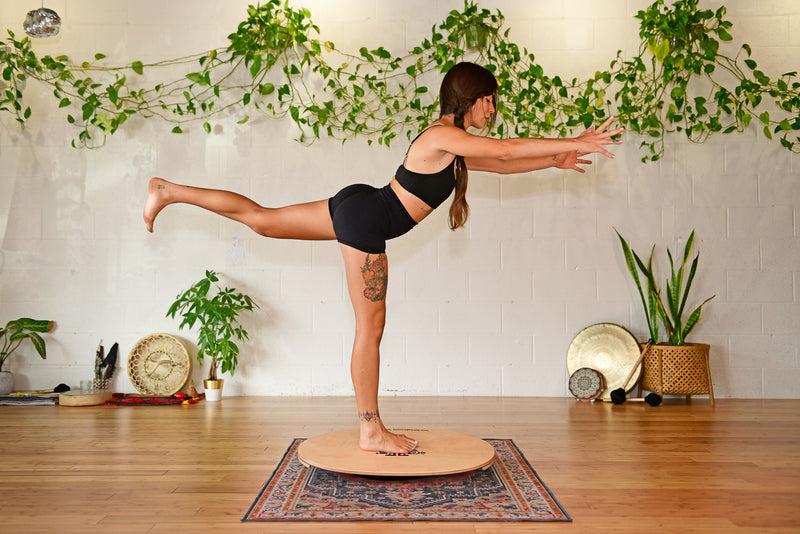
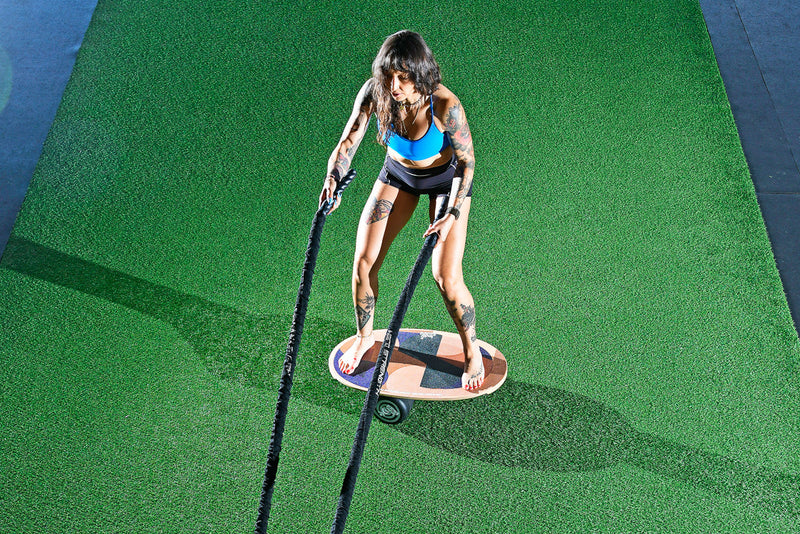
The ACSM defines this category as programs designed to improve core stability, muscular endurance, mobility, coordination, and motor control. The modalities driving it are yoga, Pilates, and barre, but the underlying principle applies to anything that demands active stabilization. Balance board exercises for core strength sit at the center of this trend, because every session demands exactly that: active, whole-body stabilization from the moment you step on.
When you step onto an Indo Board, your body immediately starts working to find center. Your ankles fire. Your hips stabilize. Your core engages without being told to. You are not isolating a single muscle. You are training your entire system to work together, which is what the body actually needs to perform well and stay healthy over time.
That is not a new idea for us. Hunter Joslin built the original Indo Board prototype in the mid-1970s out of a simple observation: surfers who trained their balance off the water were better on it. That insight has held up for 50 years. Now the broader fitness world is arriving at the same conclusion.
Why Balance Board Exercises Outperform Traditional Core Training
Most core training looks like this: you lie on a mat, do some crunches, maybe hold a plank for 30 seconds, and call it done. The muscles fire, but only in a controlled, stable environment. The second you put that same person on an unstable surface, or ask them to pivot quickly on a ski slope, or have them carry something awkward across uneven ground, the gap shows up fast.
Balance board exercises close that gap. They train what exercise scientists call proprioception, which is your body's ability to sense its position in space and self-correct in real time. It is the skill that keeps a surfer on their board through a bottom turn, keeps a skier upright through a mogul field, and keeps an older adult from going down on a wet sidewalk. It is also the skill that is hardest to build doing traditional gym work.
The research backs this up. A systematic review on functional training published in Frontiers in Physiology found measurable improvements in strength, speed, power, and balance among athletes who incorporated balance and mobility work. Physical therapists have relied on balance board exercises for rehabilitation for years, particularly for knee, ankle, and lower back recovery, because proprioceptive training accelerates functional recovery faster than static strengthening alone. The fitness industry is now catching up to what the clinical world figured out a long time ago.
Balance Board Benefits by Training Goal
One of the things that separates a balance board from most fitness tools is how broadly the benefits transfer. The same 15-minute session looks different depending on who is standing on it, but the core adaptations are consistent: better stability, stronger core engagement, improved joint resilience, and sharper body awareness.
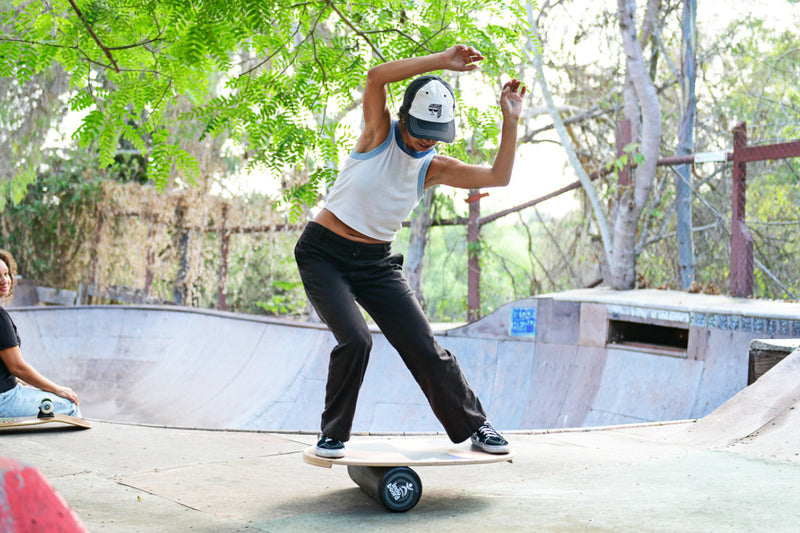
For surfers, skaters, and snowboarders, balance board exercises build the sport-specific proprioception that gym training simply cannot replicate. For athletes recovering from injury, the unstable surface accelerates neuromuscular re-education without loading the joint. For anyone sitting at a desk most of the day, regular balance training restores the movement patterns that prolonged sitting breaks down. The balance board benefits are the same across all of them. What changes is how you describe the outcome.

Which Indo Board Is Right for You
If you are just getting started with balance board exercises, the Flow Cushion is the most beginner-friendly entry point we make. It is softer underfoot and more forgiving than a roller, which makes it an ideal first step for anyone new to unstable surface training. Physical therapists recommend it regularly for patients coming back from knee, ankle, and lower back issues. You build proprioceptive skill at a pace that feels manageable, then graduate to the roller when you are ready.
The Original Board with a roller is where most people find their groove. Ten to fifteen minutes of balance board exercises per day builds real, transferable stability. The challenge scales naturally with your ability, because as your nervous system adapts, the board demands more precision from you. Our customers consistently say the same thing: you do not outgrow it. You just keep finding new edges to work.
For surfers, snowboarders, and skaters who want sport-specific training, the Rocker Board raises the challenge significantly. The narrower platform and rocker-shape create the kind of dynamic instability that mirrors what you actually face on a wave or a slope. Off-season training becomes specific training, which is exactly how it was designed.
The Bigger Shift
What the ACSM data reflects is a consumer who is thinking longer term. The question has moved from "how do I push harder this week?" to "how do I keep doing this for the next 20 years?" Balance board exercises for core strength, mobility, and joint stability are not supplementary. They are foundational. They determine how well everything else works, and how long it keeps working.
That is a shift we fully support. It is also one we have been built for from the beginning.
Balance is not a feature of what we make. It is the whole point.
Ready to start? Shop the Indo Board Original, Original Roller, Flow Cushion, and Rocker Board and find the setup that fits where you are right now.
Source: ACSM's 2026 Worldwide Fitness Trends, published in ACSM's Health and Fitness Journal, November/December 2025.